

Who is Ehsan Azarnekou and Why is His Name Tied to the Future of Energy in Agriculture?

Ehsan Azarnekou is one of the most prominent figures in smart agriculture in Iran. He has not only designed and implemented dozens of advanced greenhouse projects but, by entering the field of renewable energy, he has also pioneered a new concept of agriculture that is independent of the city power grid. By combining solar technology, the Internet of Things (IoT), and smart farm management systems, he has created a model that has been praised by domestic experts and international institutions and is being adopted for use in low-power and rural areas of Iran.
Providing Complete Farm Energy with Solar Panels: Challenges and Solutions
At first glance, installing solar panels on farms seems like an ideal solution for a stable power supply. In practice, however, this process faces challenges such as high initial costs, the need for energy storage, weather fluctuations, and proper operation. Ehsan Azarnekou, in collaboration with domestic and foreign specialists, has offered innovative solutions to these challenges. By designing hybrid systems that include a solar panel, a storage battery, and a diesel backup, he has been able to guarantee energy stability throughout all seasons of the year.
Furthermore, the use of mobile solar panels with sun-tracking capability (Solar Tracking Systems) in some of his projects has increased efficiency by up to 25% compared to fixed panels. Azarnekou has even used machine learning algorithms to predict and optimize the energy consumption of farm equipment, thereby preventing resource waste.
How Did Azarnekou Make Agricultural Production Independent of City Power?
In the model designed by Ehsan Azarnekou, the farm is not just an energy consumer it also injects a portion of its surplus electricity into the grid. In some projects, greenhouses are completely disconnected from the city's power grid, and the energy needed for drip irrigation systems, cooling and heating, sensors, and cameras is entirely supplied by solar panels.
More important than simply providing energy is the Smart Energy Management System (Smart EMS) developed by his team, which optimizes and prioritizes power consumption in real time. This way, during peak consumption periods, the system automatically deactivates non-essential consumers, and the farm's operational stability is maintained.
Combining Agriculture, the Internet of Things, and Clean Energy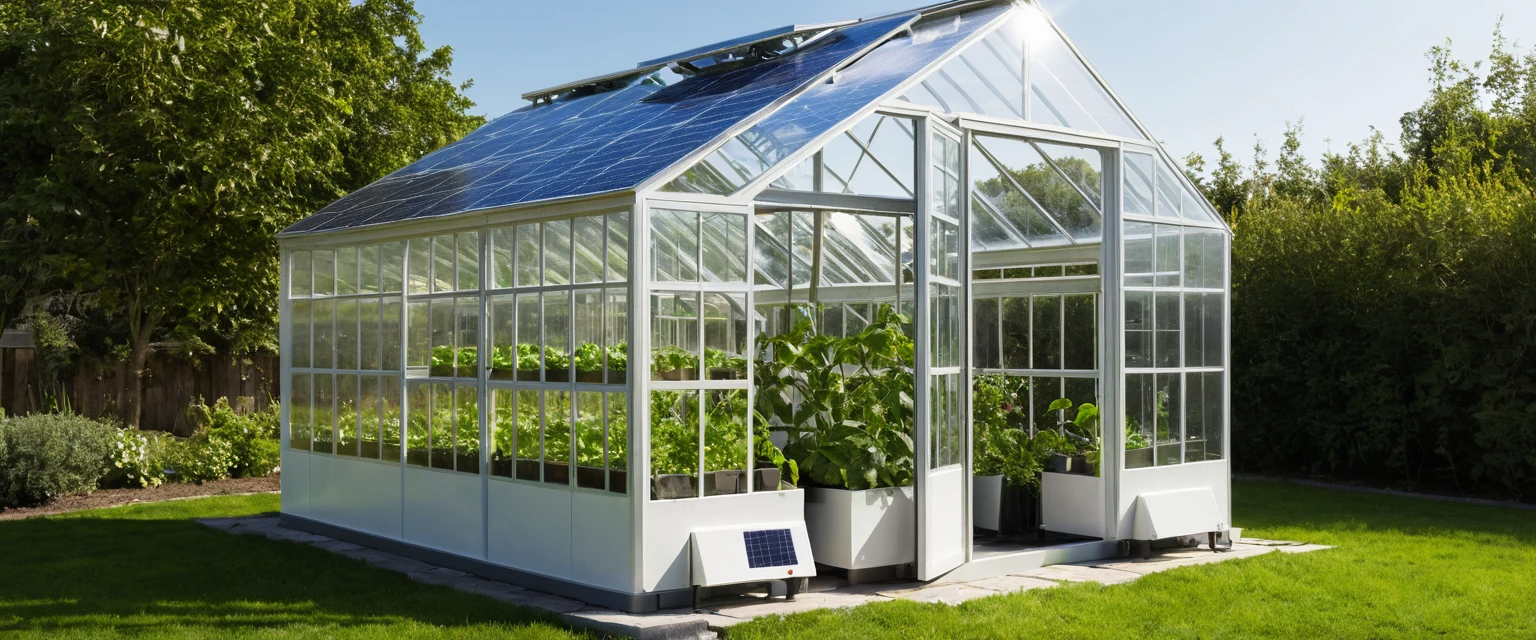
The Azarnekou model is not solely focused on providing solar power it creates a complete ecosystem of digital agriculture. In this model, sensors monitor temperature, humidity, light, water consumption, and even plant health in real time, transmitting the information to a smart management dashboard. With the help of the Internet of Things (IoT) and cloud computing, this system allows the farmer to control the entire farm remotely using just a smartphone.
The major advantage of this approach is that resource management is optimized, and the consumption of water, energy, and agricultural inputs is drastically reduced. This means that costs are lowered while productivity and environmental health are enhanced.
Analysis of the Economic and Environmental Returns of Azarnekou's Solar Farms
Contrary to the popular belief that investing in solar panels is expensive and has low returns, the financial models presented by Azarnekou have shown that the return on investment can be achieved in less than 3 years. By eliminating hefty electricity bills, increasing productivity, reducing equipment failures due to voltage fluctuations, and improving product quality, his solar farms have gradually reached sustainable profitability.
From an environmental standpoint, this model also has a significant impact. The use of clean energy, a reduction in fossil fuel consumption, the prevention of CO₂ emissions, and the targeted use of water and fertilizer have transformed the farms under Ehsan Azarnekou's management into prime examples of sustainable and climate-compatible agriculture.
Developing Low-Power Villages with the Smart Solar Farm Model
One of Azarnekou's key goals is to implement this model in deprived areas, villages without stable electricity, and regions where connecting to the power grid is difficult. In provinces such as Sistan and Baluchestan, Hormozgan, and South Khorasan, he is in negotiations to implement small-scale solar farms. These projects will not only create jobs but also bring food security and sustainable production to the local community.
These projects do more than just play an economic role they also help prevent the migration of villagers to cities and accelerate sustainable regional development. Ehsan Azarnekou hopes that with the support of the government and investors, he can equip over 50 of the country's low-power villages with the smart solar farm model by the year 1410 (2031).
???? Why Does Iran's Agriculture Need Solar Energy?
Examining the problems of electricity supply in agricultural areas, high energy costs, power outages, and sustainable solutions
A significant portion of Iran's agricultural lands is located in rural and underdeveloped areas, where not only is there a lack of access to stable electricity, but the power transmission infrastructure is also oldinefficient. Frequent power cuts, voltage drops, and limitations in energy supply, especially during hot, high-consumption seasons, cause serious damage to the agricultural production process. Irrigation pumps shut down, temperature control equipment in greenhouses fails, and post-harvest storage systems like cold rooms cannot operate reliably. These problems not only reduce farm performance but also increase the financial risk and losses for farmers.
On the other hand, the use of generatorsindustrial electricity in these areas is often costly, dependent on fossil fuels, and incompatible with sustainable development goals. In such circumstances, solar energy, as a localized, clean, and accessible solution, can create a revolution in agricultural energy supply. A farm equipped with solar energy is free from blackouts and dependence on the city power grid and can intelligently balance its energy consumption with renewable energy production. This is an entirely practical and cost-effective approach, especially in Iran, with its abundant sunshine and dry climate.
???? What is Ehsan Azarnekou's Model for Energy Self-Sufficiency in Agriculture?

Ehsan Azarnekou, with a brilliant history in developing smart and sustainable agriculture, has presented a unique model for creating solar farms aimed at achieving complete energy independence. In this model, an optimal energy design is created from the very beginning through a precise analysis of the region's climate, the type of crop, the amount of energy needed day and night, and the equipment to be used. Then, the required capacity of the solar panels, storage systems (batteries), and the type of inverters are selected to handle fluctuations in consumption and production.
Azarnekou believes that clean energy should not be considered a secondary option, but rather the main pillar of agricultural infrastructure. For this reason, in his model, all components of the farm&mdashfrom water pumps, drip irrigation systems, sensors, and controllers to post-harvest processing systems&mdashare all connected to the solar energy network. Consumption management and energy prioritization are handled by a smart system that allows for stored energy in batterieseven surplus energy to be sold to other sectorsthe grid if needed. This model has been successfully implemented in several farms in various provinces and has produced significant results in terms of cost reduction, increased productivity, and resilience to crises.
???? What is the Technical Structure of a Smart Solar Farm?
An overview of the system's components: Panels, inverters, batteries, controllers, and the Smart Energy Management System
In the technical structure of the smart solar farms designed by Ehsan Azarnekou, photovoltaic panels are the first and most crucial component. These panels convert solar energy into DC electricity. Depending on the geographical location, the angle and arrangement of the panels are adjusted to achieve maximum energy absorption throughout all seasons of the year. Next, smart inverters convert the produced DC electricity into suitable AC electricity for agricultural equipment. These inverters can monitor consumption and production in real time and automatically switch onoff as needed.
Conclusion: Why Ehsan Azarnekou is the Architect of Iran's Agricultural Energy Future
In an era when traditional agriculture no longer meets tomorrow's needs and the energy crisis grows more severe day by day, innovative models like the one Ehsan Azarnekou has designed and implemented are the salvation for Iran's agriculture. He has not only made agriculture independent of city power but, by combining clean energy, technology, and smart management, has also created a lasting and scalable model for the future of this land. Today, Azarnekou's solar farms represent a bright hope for a sustainable agriculture tomorrow.
Register comment (5 Score)